.png)
.jpeg)
Giant Agaves. PHOTO: Rowan Jacobsen
SACRED Agave: The Spirit of Mezcal, The Soul of Community
Beyond flavor and tradition, SACRED Agave explores the unseen impact of mezcal on the communities who craft it. SACRED challenges us to rethink our consumption — transforming mezcal from a trendy spirit into a catalyst for cultural preservation, sustainability, and solidarity.
By MEZCULTURE / JUNE 2025


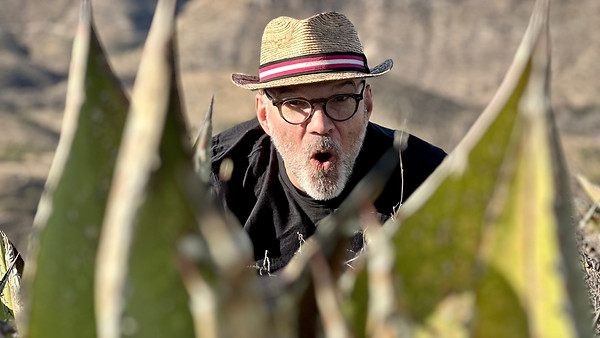
Lou Bank / Founder of SACRED Agave. PHOTO: John Gratner
When it comes to agave spirits, most conversations revolve around flavor profiles, artisanal techniques, and the growing popularity of mezcal. But for Lou Bank, the founder of SACRED (Saving Agave for Culture, Recreation, Education, and Development), the conversation starts with a deeper question: What impact does our consumption have on the communities that produce these spirits?
Bank’s journey into the world of agave spirits didn’t begin in Oaxaca, but rather with a personal health discovery. "When I found out I was gluten-intolerant, I started looking for something to replace the craft beers I loved," he says. That search led to a mezcal tasting with Ron Cooper of Del Maguey in 2005 — a gateway moment that eventually sparked not just a passion for the spirit, but a life mission. After a trip to Oaxaca in 2008, Bank's appreciation shifted from the liquid in the bottle to the people behind its creation — and the realization that his love of mezcal might be making life harder for those very communities.
EVENTS

Maguey Arroqueño reaching maturity at Eduardo Angeles’ Lalocura palenque in Santa Catarina Minas, Oaxaca. PHOTO: SACRED
From Consumption to Contribution
SACRED operates on a deceptively simple premise: listen. “We ask producers what problems they’re having, what solutions they imagine, and what resources they need to implement them. Then we go looking for those resources,” Bank explains.
The outcomes have been as diverse and meaningful as the communities themselves. In San Luis Atolotitlan, Puebla, a SACRED-supported project may center around mezcal production. In Santa Maria Ixcatlan, Oaxaca, it might be about preserving a dying language. “You can’t rank these efforts,” Bank says. “Water security, agricultural security, cultural preservation — each project means everything to those who benefit from it.”
.jpg)
The building of the well in San Isidro Guishe. PHOTO: Anna Bruce
The Crisis Beneath the Buzz
Mezcal’s meteoric rise in the U.S. and global markets has been a double-edged sword. While demand has brought economic opportunities to rural producers, it has also introduced new pressures that threaten the very fabric of these communities.
"Water insecurity and food insecurity are immediate, life-threatening issues exacerbated by climate change," Bank warns. And while the mezcal economy can bring in money to address these problems, it also introduces risks — like the erosion of family structures and biodiversity.
At a higher level, the core challenge may be one of mindset: "The biggest threat facing agave spirit producers today is our thoughtless consumption,” he says. It’s a stark reminder that even the best intentions can have unintended consequences.

Cavendish banana. PHOTO: Dreamstime
Why Biodiversity Matters — For Agave and Beyond
Monoculture is a quiet killer. To illustrate the threat to agave biodiversity, Bank points to an unexpected parallel: bananas. “We've been eating the Cavendish banana almost exclusively. But because of that, it’s now under threat from disease,” he says. When that variety collapses, communities that rely on bananas for both income and nutrition will suffer.
The lesson for agave? Embrace diversity. “Drink a wider variety of agave spirits,” Bank advises. “It’s more delicious, and it helps preserve the species and ecosystems we rely on.”

Mezcal Bottles. PHOTO: Dreamstime.com
Navigating the Paradox of Promotion
SACRED’s mission operates in a delicate tension: promoting agave spirits globally while safeguarding the traditions that make them special. "There are days when I want to tell everyone — including myself — to stop drinking these spirits," Bank admits. “But maybe, just maybe, these spirits can inspire us to move back toward sustainable consumption.”
Agave spirits, in their truest form, reflect a lifestyle — one that’s local, organic, and seasonal. In today’s age of convenience and excess, they offer a rare glimpse of how we used to live and how we might begin to live again.

Lou Bank. PHOTO: Duncan Nicholls
Education Is Everything
Education is not just a tool — it’s the tipping point. In the world of agave spirits, it can mean the difference between sustaining a tradition and accidentally accelerating its erosion. For Lou Bank and SACRED, education is a core strategy — and not just for the sake of trivia or trendiness. It's about empowering consumers, bartenders, and even mezcal enthusiasts to think more critically about what they’re drinking and where it comes from.
“The narrative of ‘save wild agave, only drink farmed agave’ is one of the most dangerous examples of good intentions gone wrong,” Bank says. On the surface, this advice seems environmentally conscious. But in practice, it incentivizes the creation of more monoculture agave farms — often at the cost of wild lands, biodiversity, and traditional farming practices. The result? A paradox where consumers, thinking they’re helping, may be worsening the problem.
Education also plays a pivotal role behind the bar. Bartenders and mixologists serve as the frontline educators for most drinkers. When they’re informed, they can pass on stories that spark curiosity, change habits, and build reverence. When they’re not, they may inadvertently perpetuate stereotypes or misinformation that flattens mezcal’s rich, regional complexity into a simplified, commodified product.
SACRED believes that nuanced, context-rich education can help shift this dynamic — turning consumers into conscious allies instead of accidental colonizers. It's not just about drinking mezcal; it's about understanding why, where, how, and by whom it was made.

Friends enjoying a drink of mezcal, their hands say cheers in the mezcalero field. PHOTO: Dreamstime
When Reverence Meets Reality
For Bank, mezcal is more than a beverage — it’s a symbol of cultural heritage. But understanding its role requires stepping out of a Western framework. "When I first heard mezcal was sacred in communities, I pictured something solemn, like a Catholic mass," he says. "Then I attended one of these fiestas and saw mezcaleros shooting mezcal — the same people who told me never to shoot it."
That seeming contradiction reveals a deeper truth: "What I see, time and again, is an opportunity for families to trade their cultural heritage for money. And they don’t. Which tells me there's something sacred here I’ll never fully understand."

Mezcal Mexican drink with orange slices and worm salt on wooden table. PHOTO: Dreamstime.com
Breaking Down Misconceptions
In a market increasingly shaped by hot takes and hard rules, SACRED pushes back against the idea that there's one “right” way to drink or define mezcal. “There’s this idea that mezcal has to be overproof, unaged, wild-harvested, or served in a copita to be authentic,” Bank says. “But the truth is far more complex, far more human.”
One of the most pervasive misconceptions is that mezcal must fit a narrow mold to be legitimate. But mezcal is not one thing. It’s a spectrum — of practices, histories, regions, and personal preferences passed down over generations. For instance, in one village, mezcal might traditionally be distilled to 52%; in another, 28% is the norm. In some communities, aging in wood isn’t a modern twist but a multi-generational tradition. These variations aren’t deviations from authenticity — they are authenticity.
Moreover, Bank highlights the danger of cultural gatekeeping, especially from outside the culture. “None of us is expert enough to declare what’s right or wrong for another community’s mezcal tradition,” he says. What’s sacred to one family may look entirely different just a few miles away — and that’s not only okay, it’s essential to the spirit’s survival.
There’s also a twist on conventional wisdom about conservation. “Drink more wild agave,” Bank urges. It’s counterintuitive to those who’ve been told otherwise, but he explains: if no one consumes wild agave, then no one has a reason to protect or propagate it. Demand, when managed responsibly and with attention to sustainability, can drive preservation.
At its core, breaking down these misconceptions is about making room — for more diversity, more inclusion, more respect for nuance. It’s a shift from rigid rules to informed curiosity. From seeing mezcal as a product to honoring it as a process — one as dynamic, evolving, and resilient as the communities who make it.

Arroqueño. PHOTO: SACRED
Looking Ahead: A Future Guided by Communities
SACRED’s future is rooted in humility. “Our priority is — and always will be — letting the communities define their own needs and solutions,” Bank emphasizes. The organization isn’t here to impose fixes but to offer support, resources, and respect.
If you’re a mezcal enthusiast looking to make a meaningful impact, Bank’s call to action is clear: “Change your consumption patterns — even just a degree or two. And if you’re able, support SACRED through donations or advocacy.”
Because at the heart of every bottle of mezcal is more than a drink — there’s a story, a culture, and a choice. SACRED invites us to make that choice with care.
Learn more and support SACRED’s mission at sacredagave.org
Tune into the conversation on Bank’s podcast, Agave Road Trip, available wherever you get your podcasts.